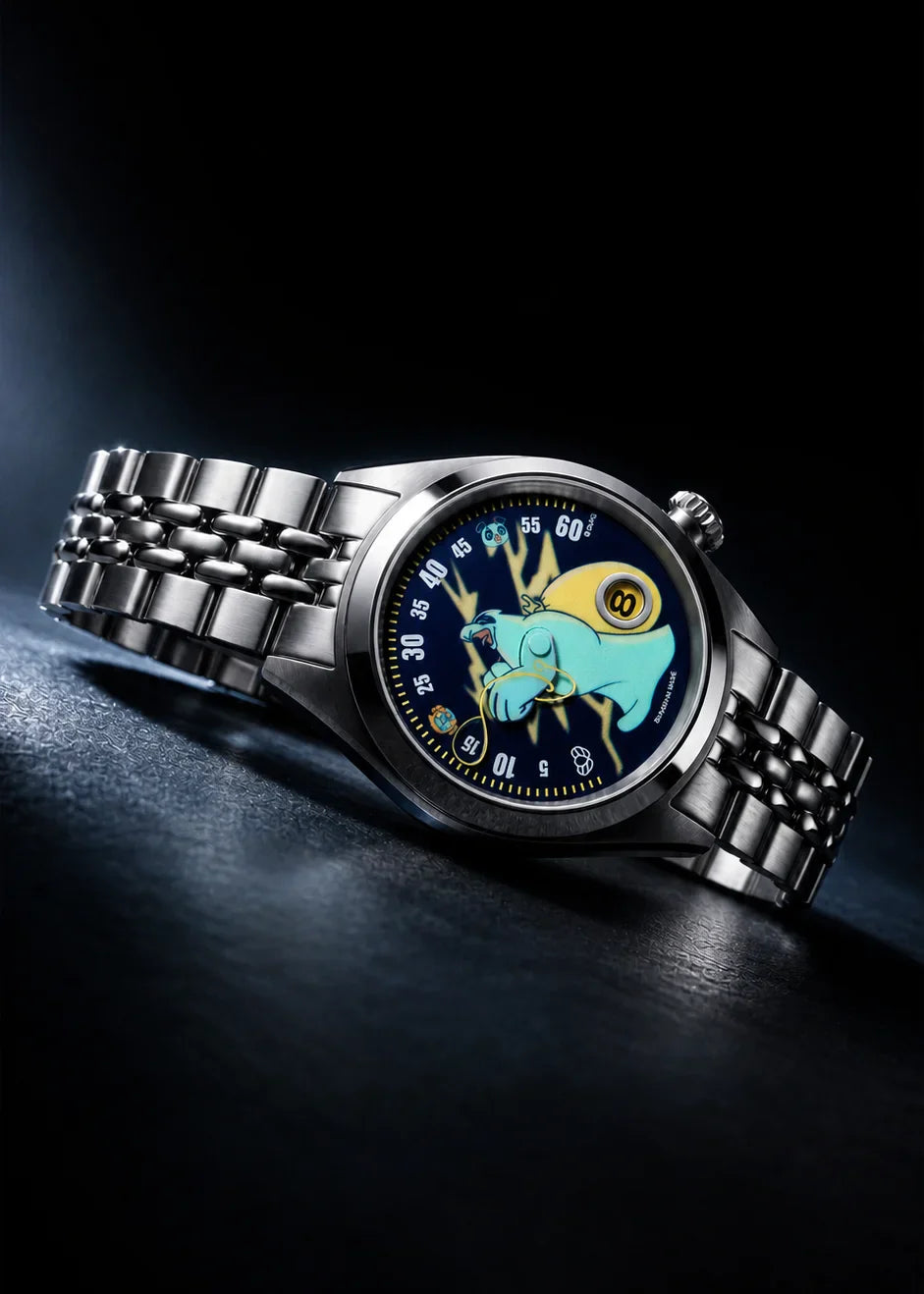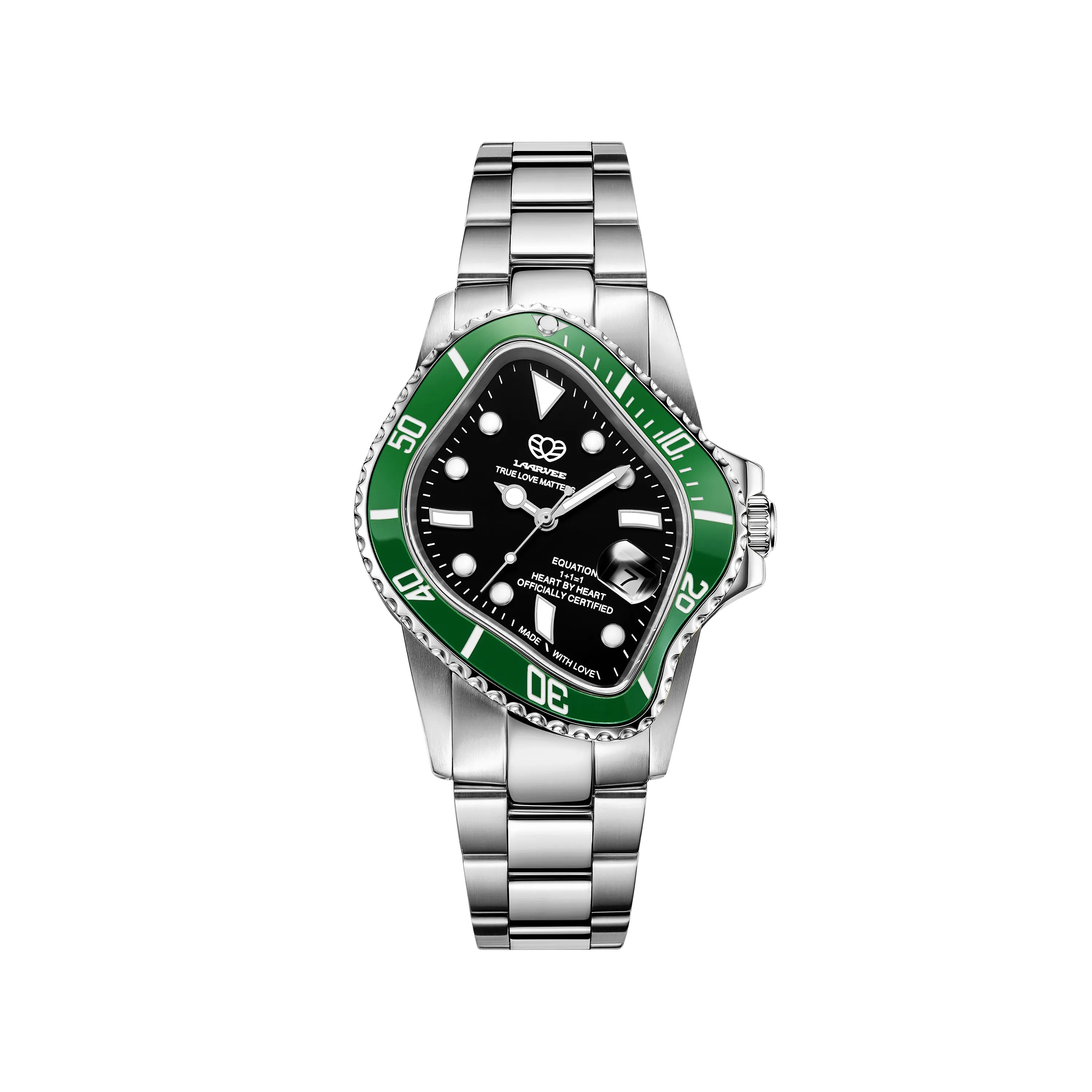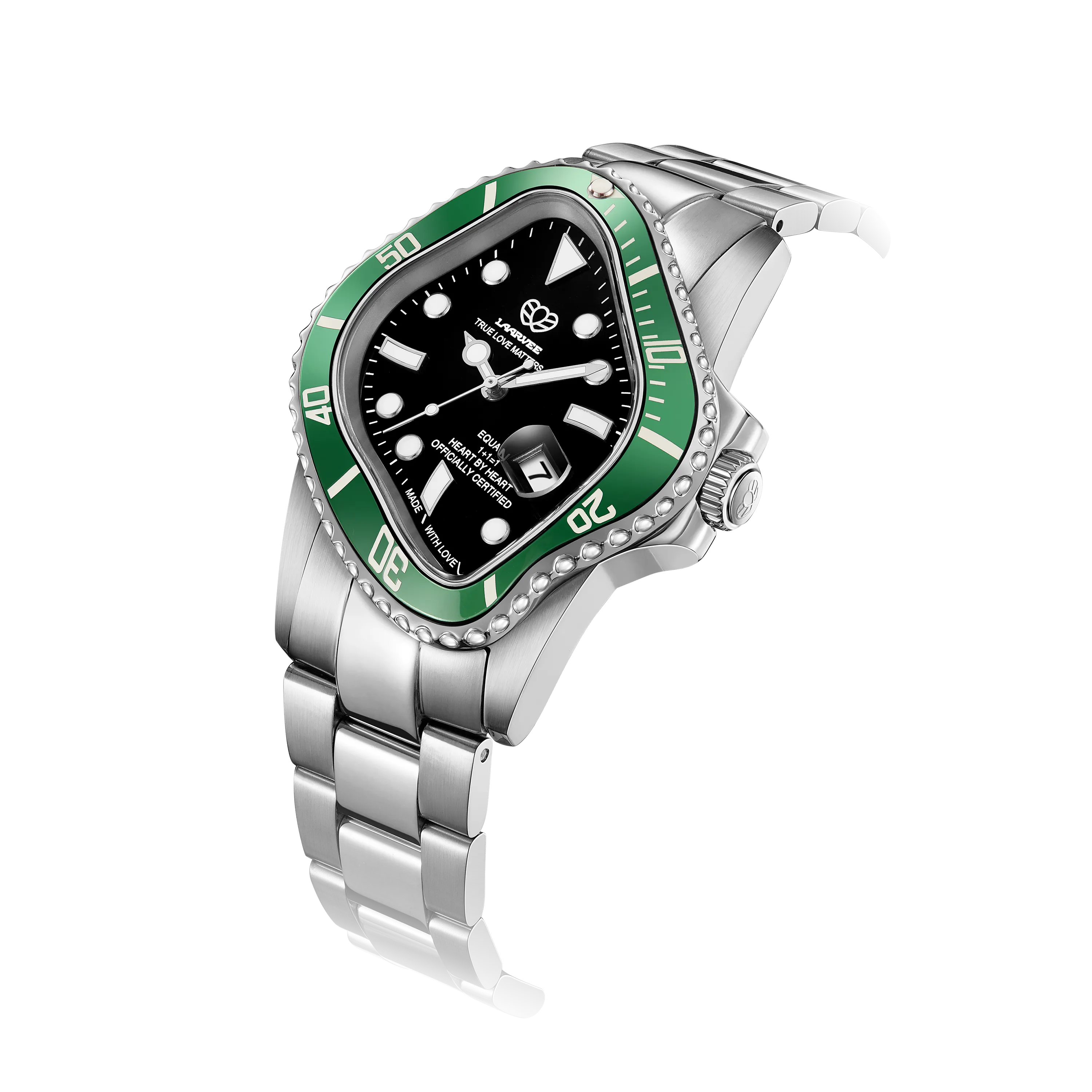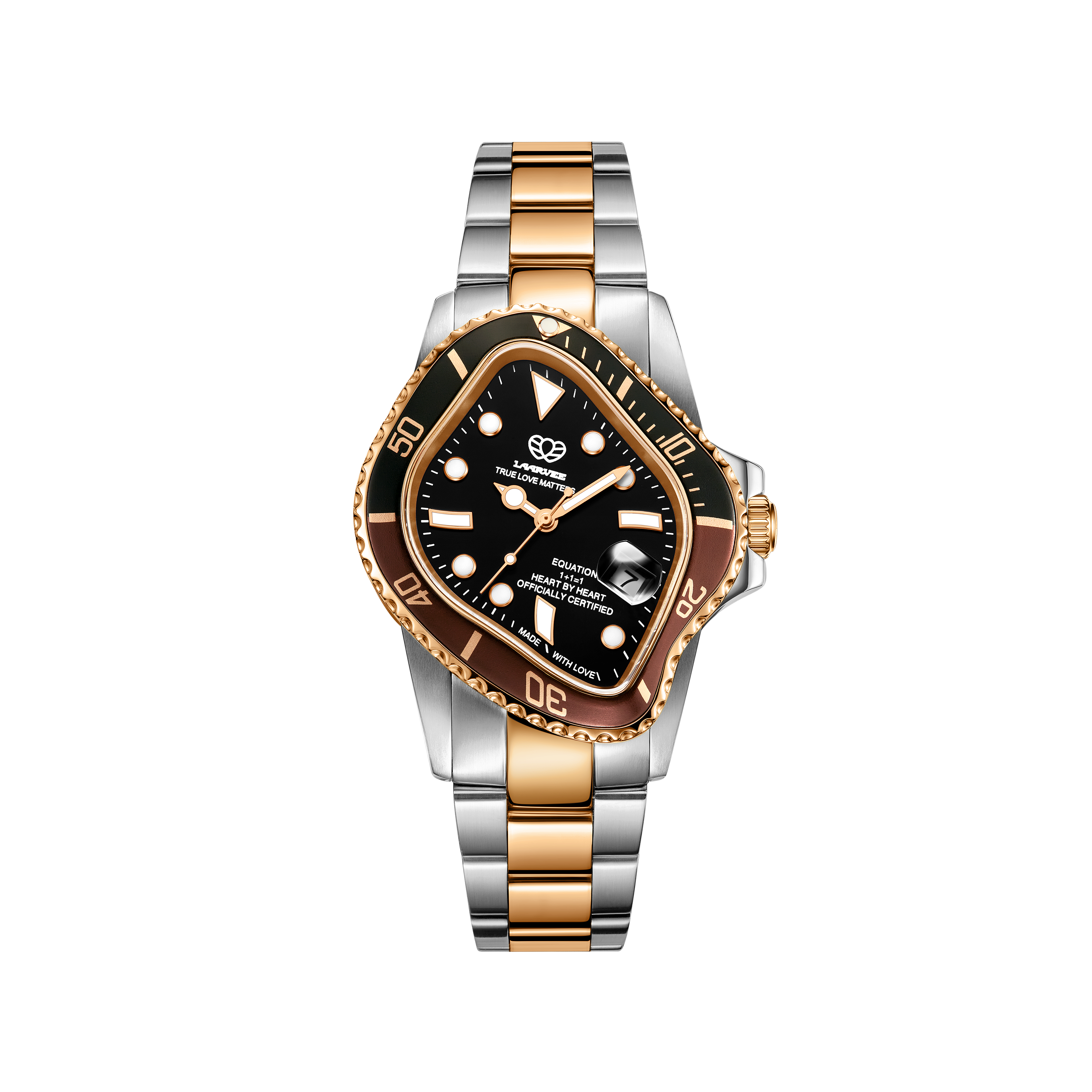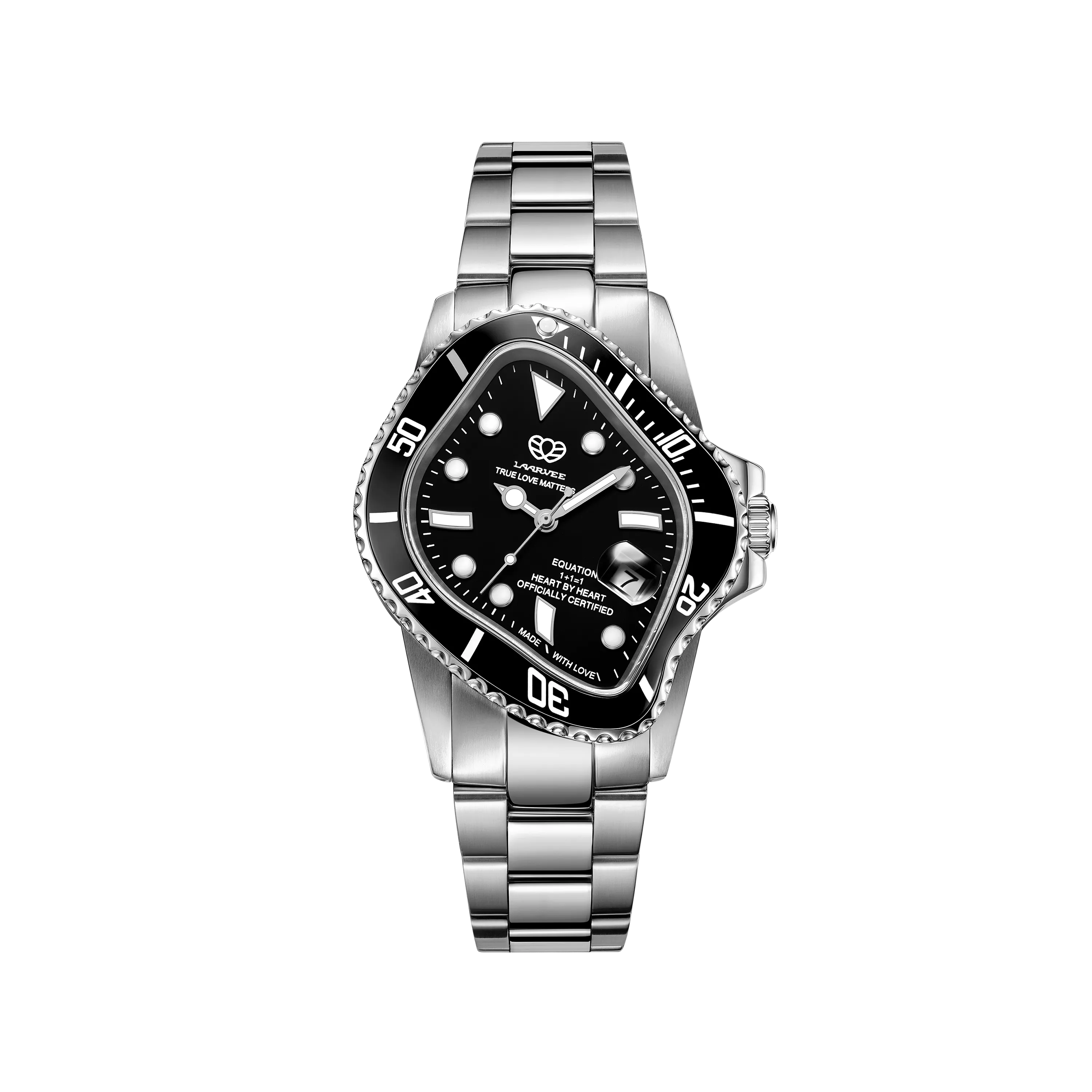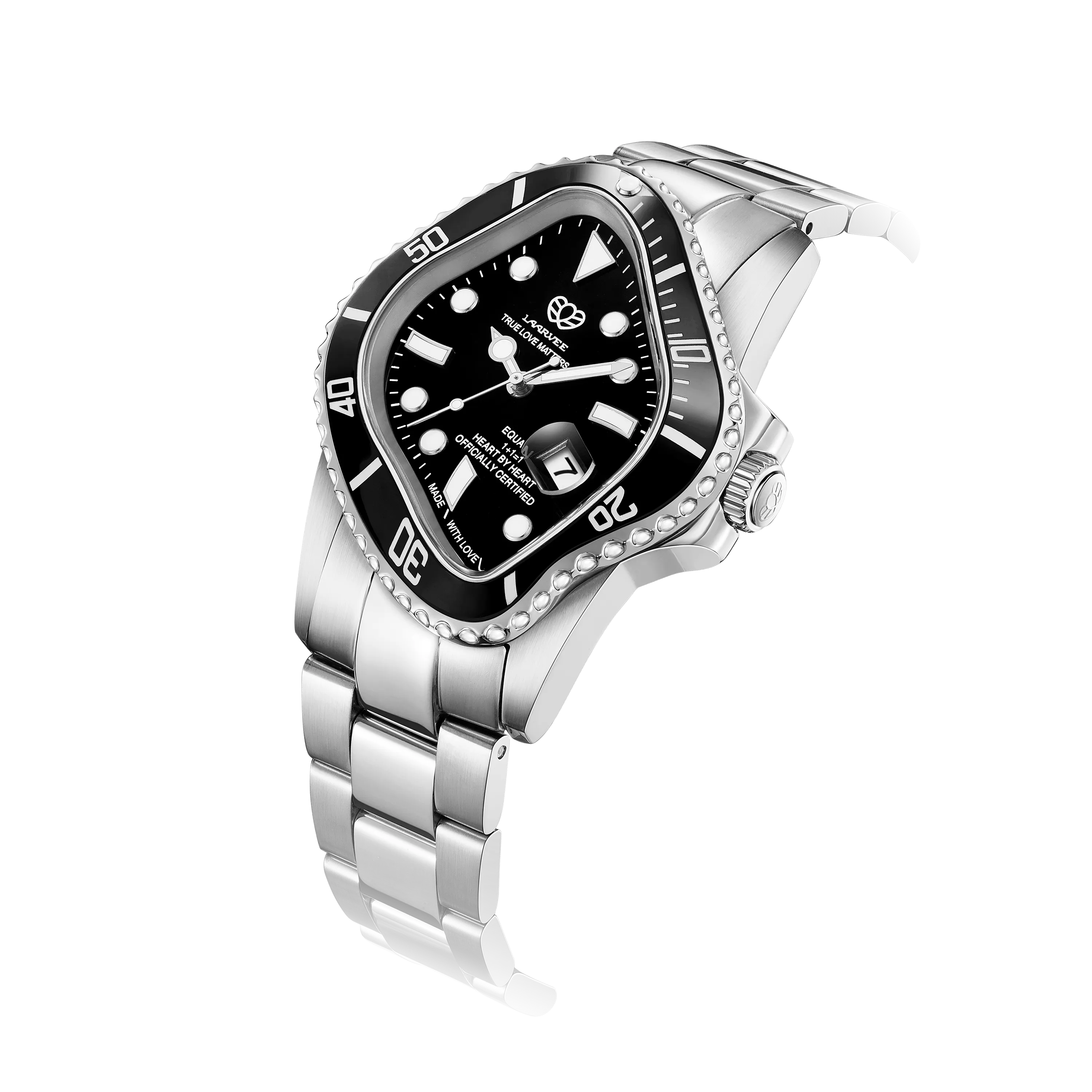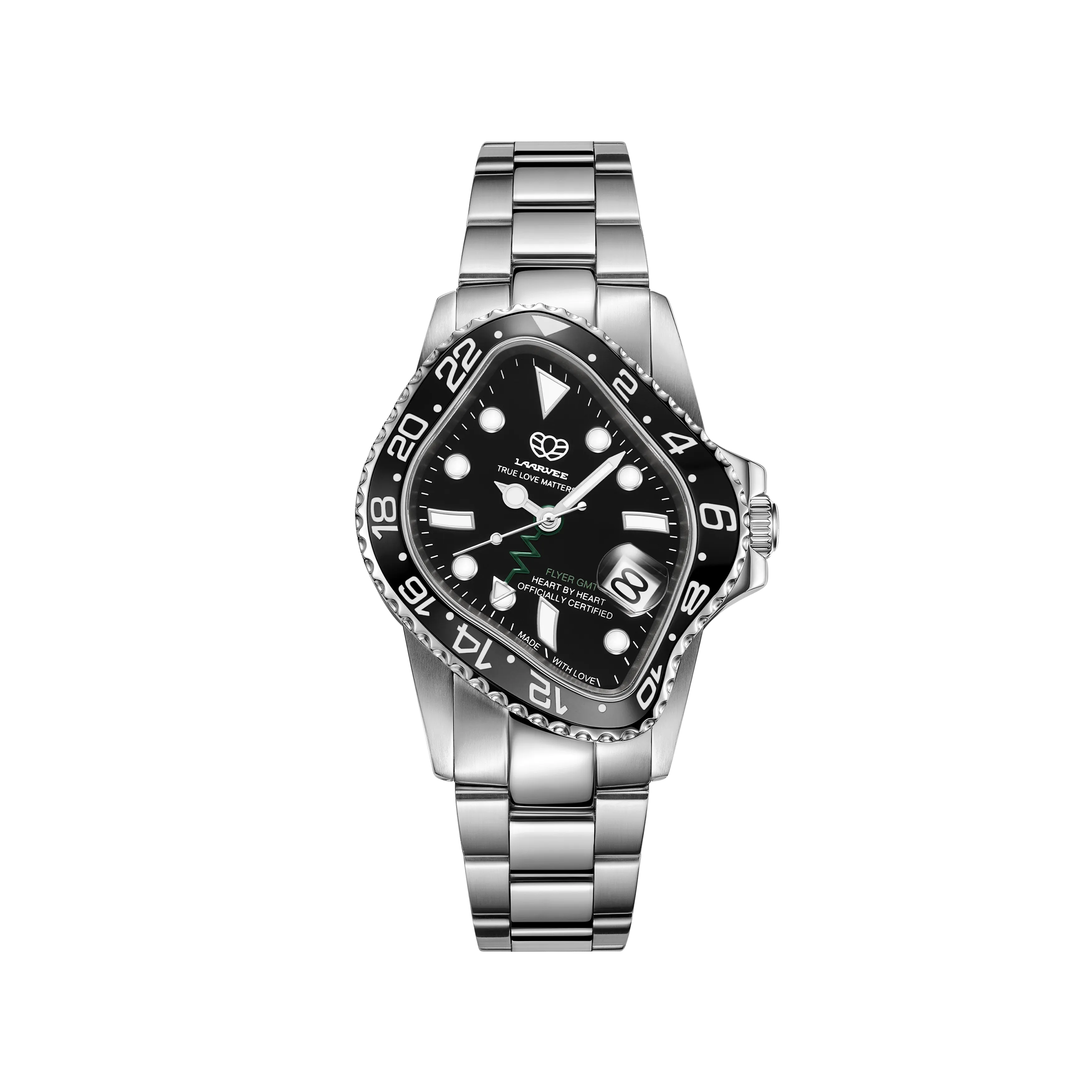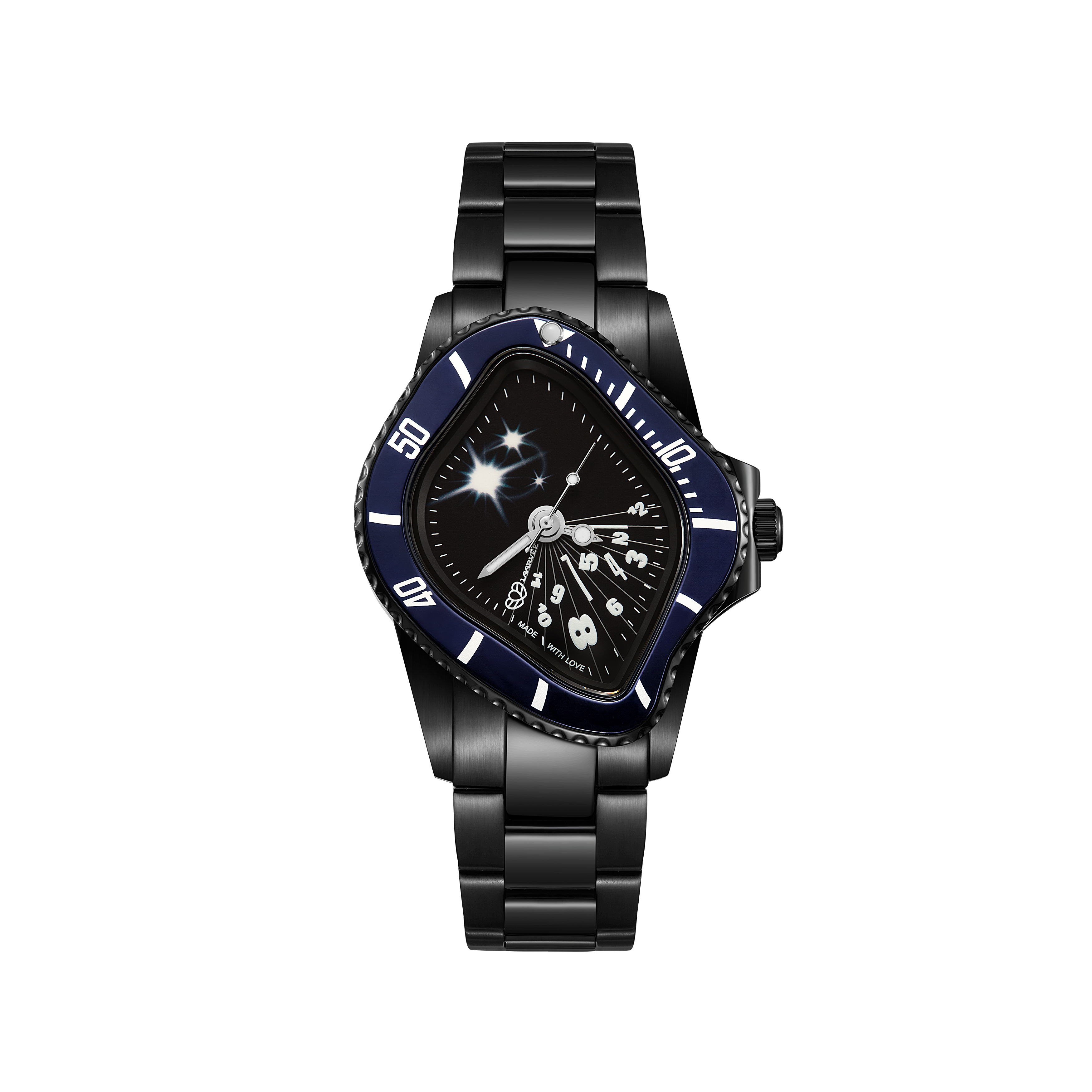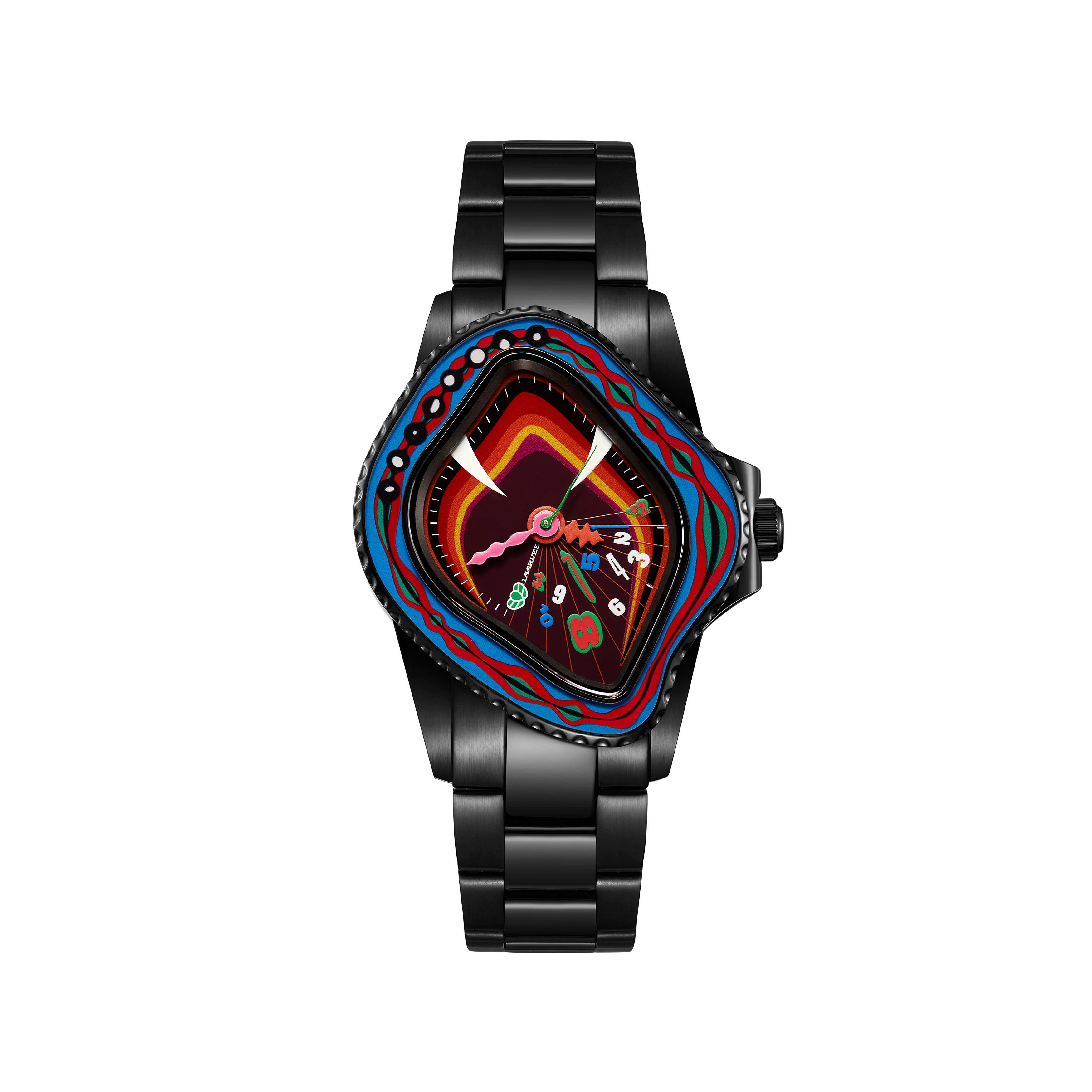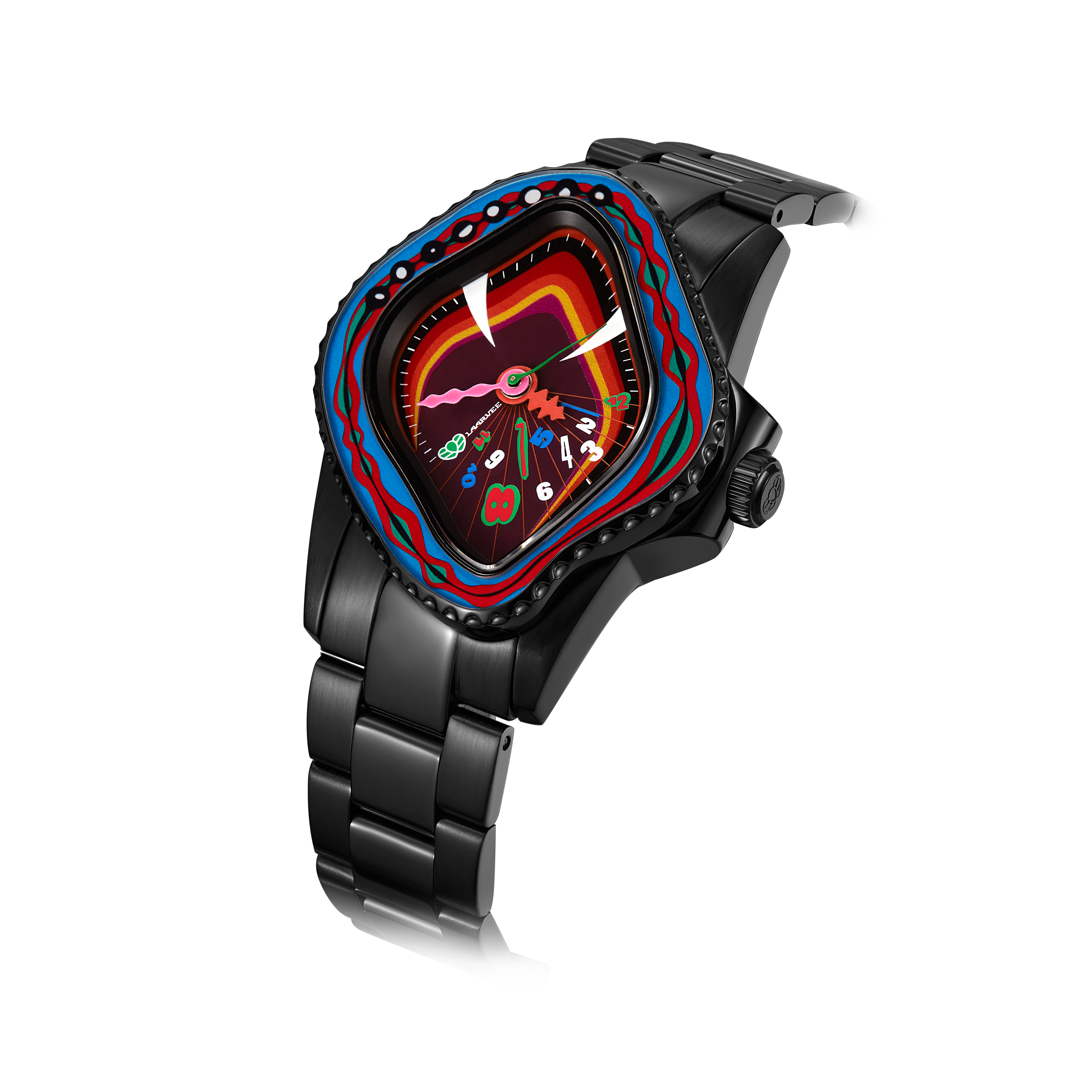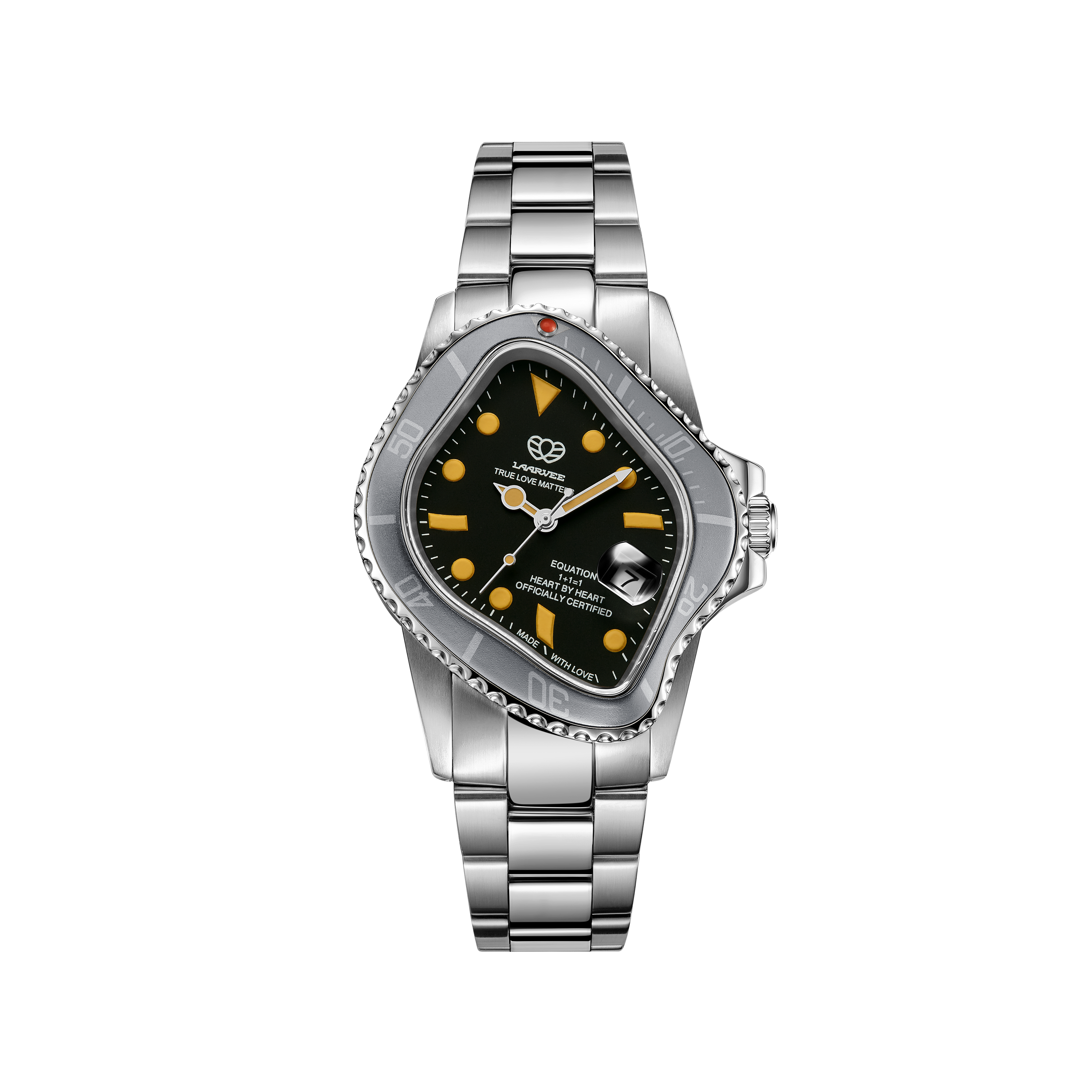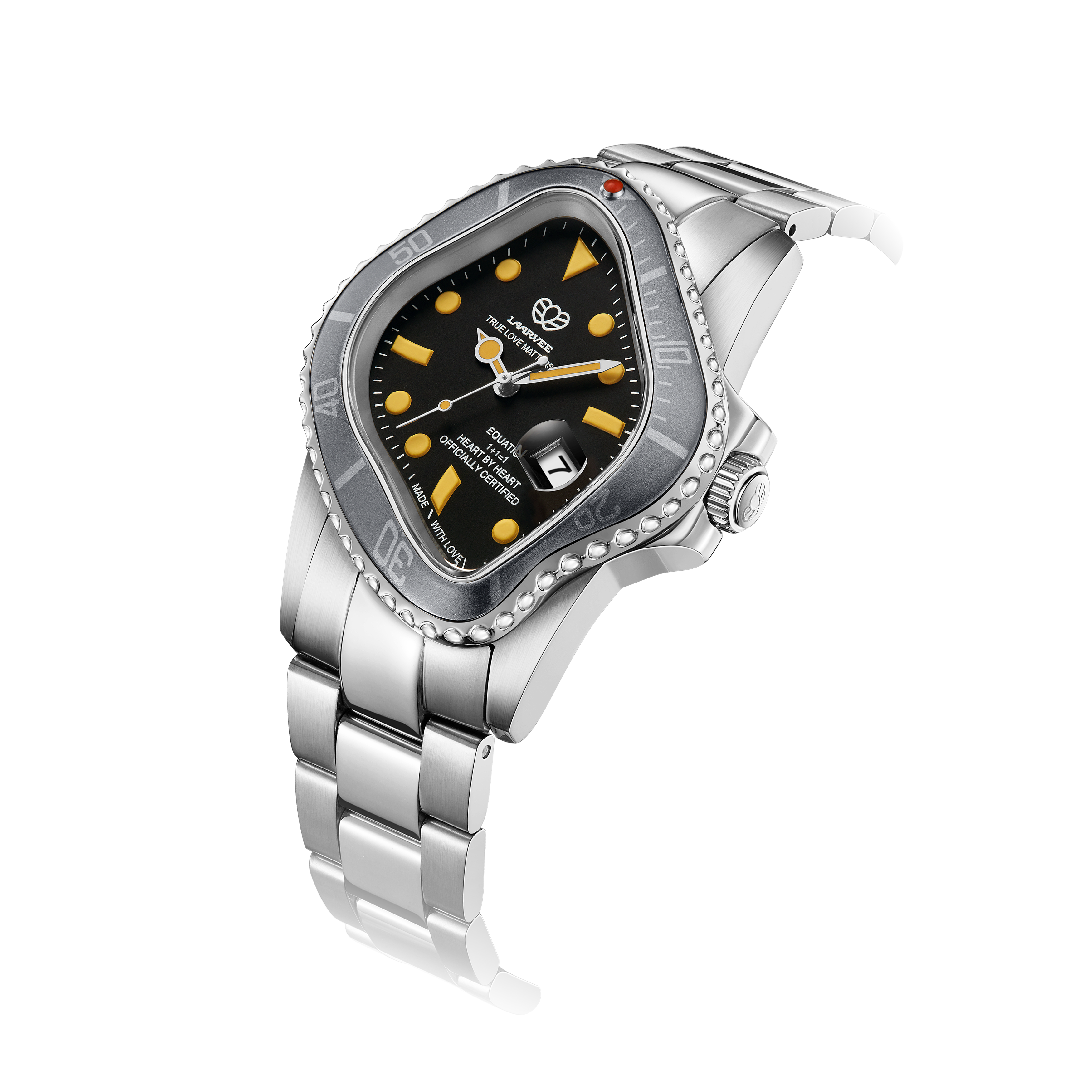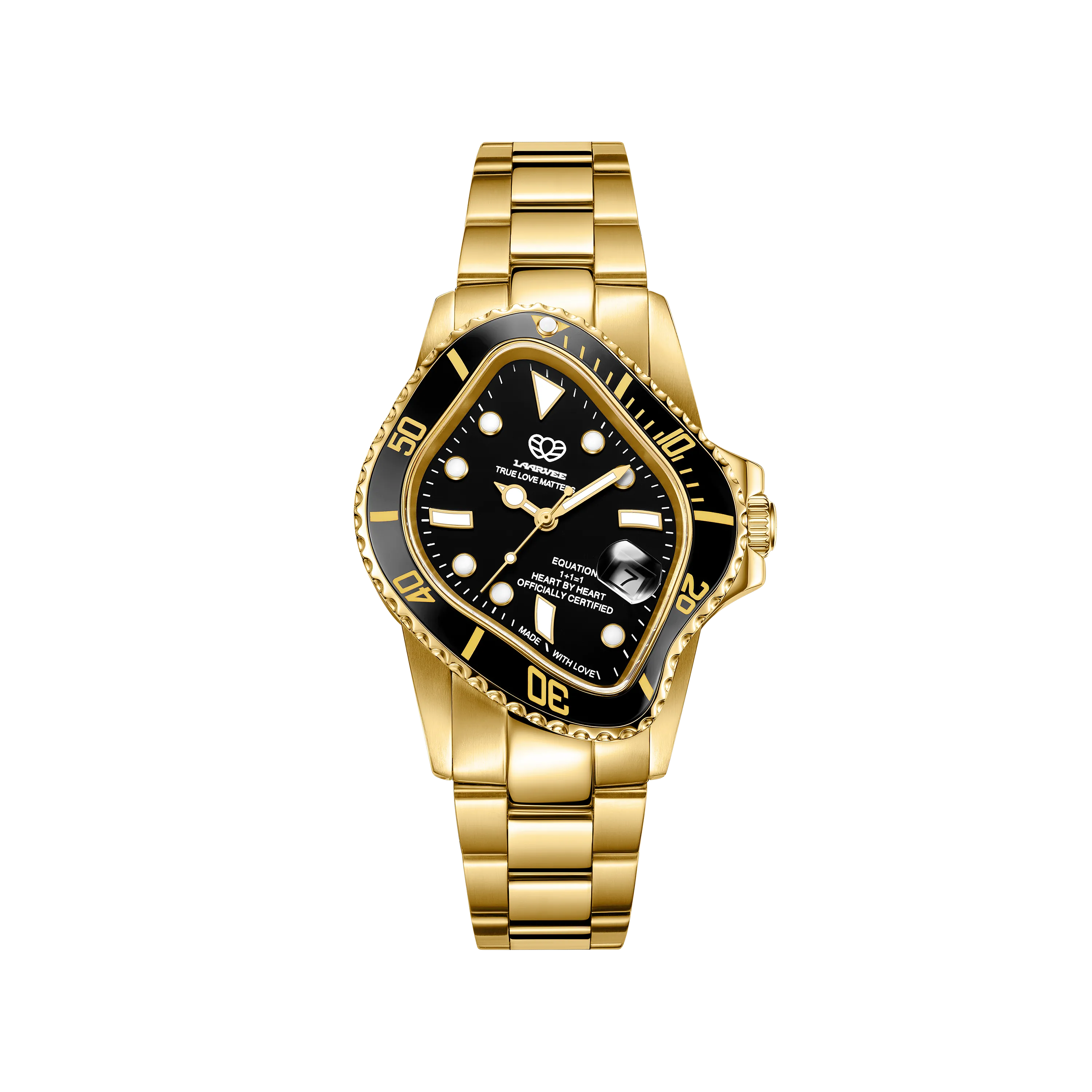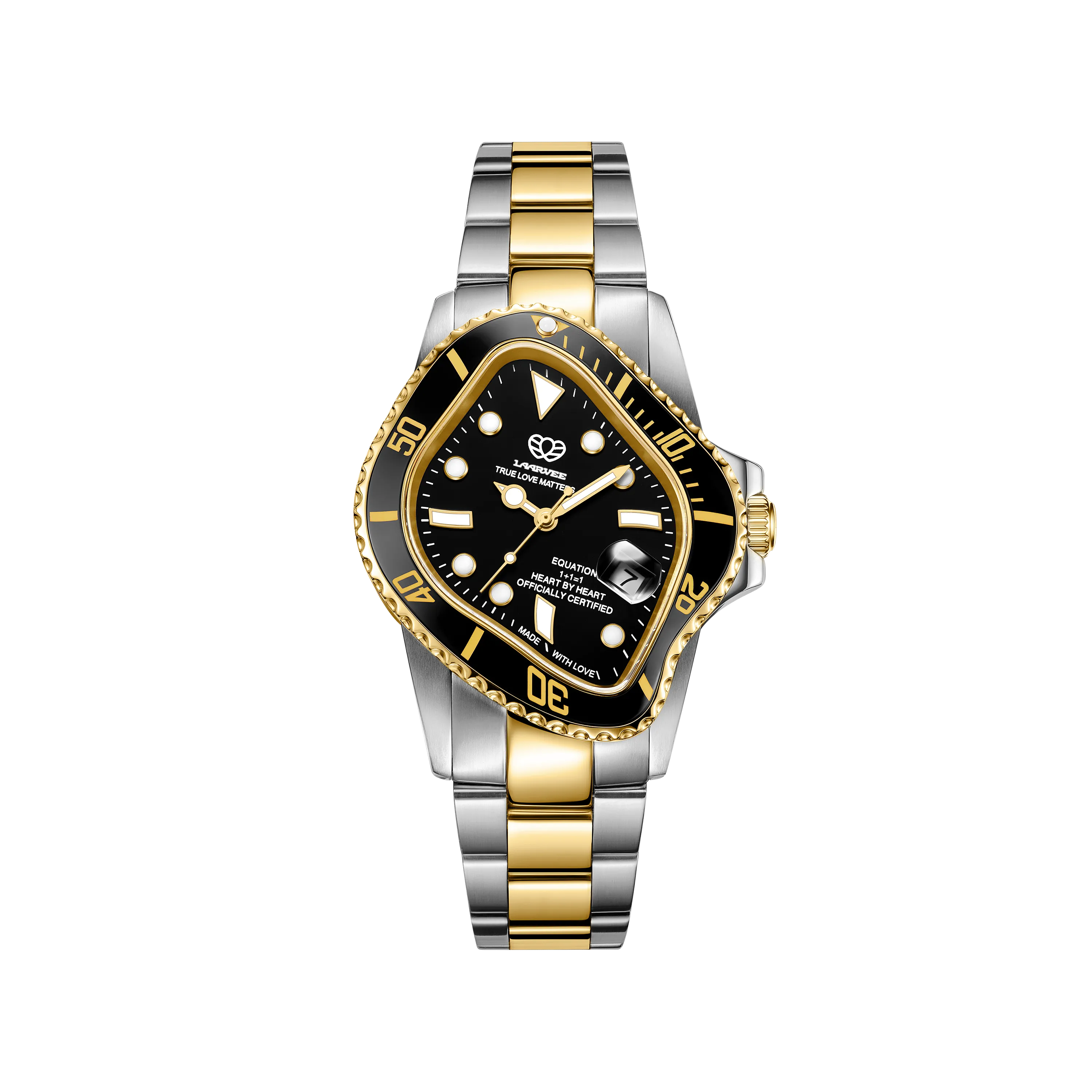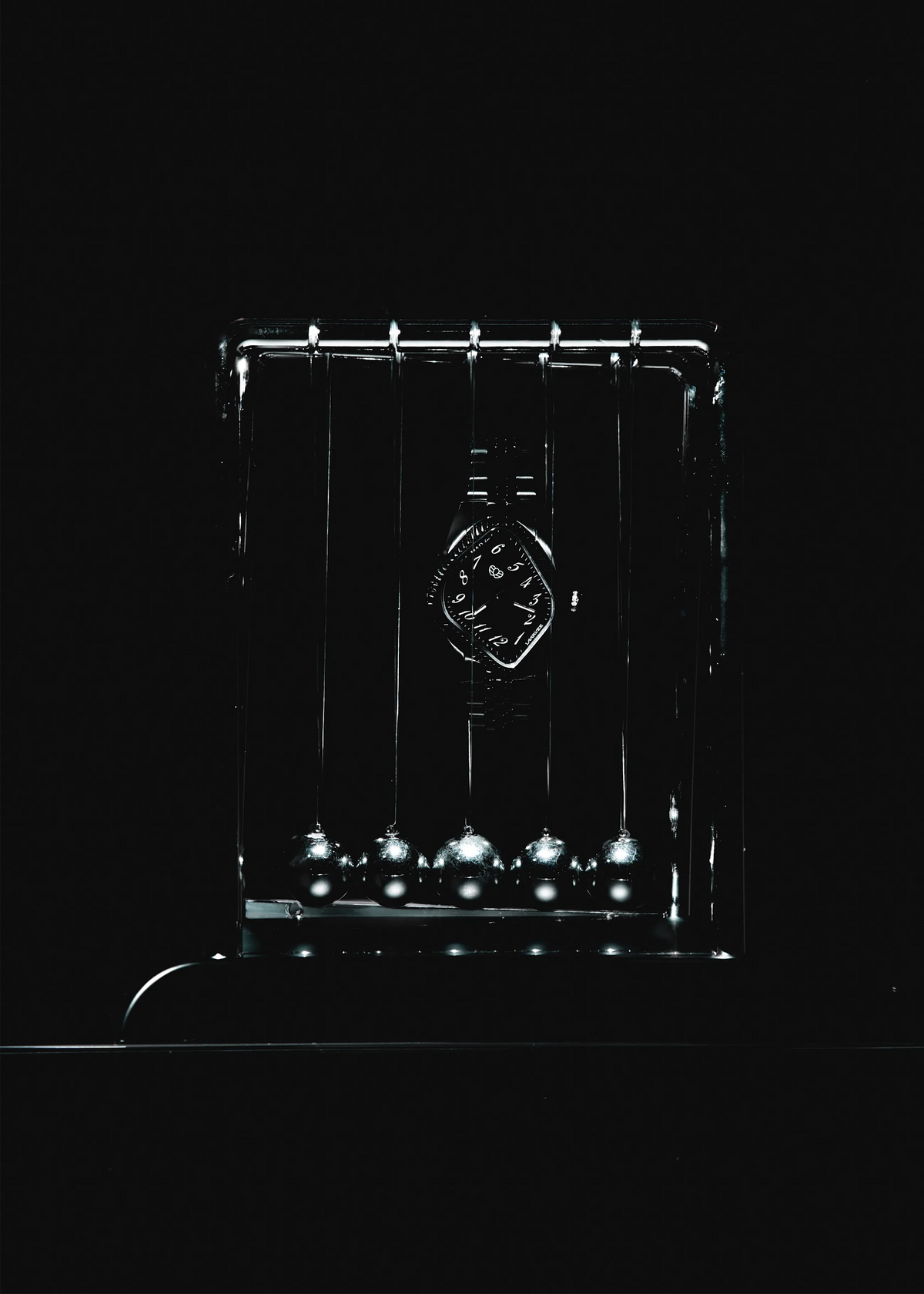
Created in collaboration with MAD Paris, the new PEA003 begins with a deliberate contradiction. The hour and minute hands move counterclockwise, while the seconds hand continues clockwise. Two opposing directions exist on the same dial, disrupting the instinctive way we have learned to read time and turning a familiar mechanical rhythm into something unexpectedly different.

But reversing time on a mechanical watch is not simply a matter of making the hands turn in the opposite direction. The real challenge lies inside the movement. For this project, the Japanese Miyota 90S5 automatic mechanical movement was specially reworked so that the hour and minute indication could operate counterclockwise while the seconds indication retained its conventional clockwise motion. Two opposing directions had to coexist within the same mechanical system without compromising the movement’s fundamental operation.

Changing the direction of the indication means rethinking how motion is transmitted through the movement. Gear engagement, torque delivery, mechanical tolerances and hand alignment all become critical: altering one part of the system can influence resistance, efficiency and the stability of everything that follows. The objective was not simply to achieve reverse motion, but to integrate it into the movement as a coherent mechanical function. What looks almost effortless on the dial is the visible result of solving a far more complex problem underneath.

That technical contradiction became the foundation of the collaboration between LAARVEE and MAD Paris. Both approach watch design with an instinct to question what is already accepted, but the intention here was not to add complexity for its own sake. Instead, the watch changes one of the most fundamental assumptions of traditional timekeeping: the direction in which time is expected to move.

Around the reversed display sits the sculptural fluted bezel, one of the defining visual elements of the PEA003. Its repeated grooves create alternating surfaces of light and shadow as the wrist moves, sharpening the asymmetric outline of the case and giving the watch a stronger sense of depth. In silver, the geometry becomes brighter and more pronounced; in black, the same structure becomes darker, quieter and more severe.

A crown meticulously hand-set with moissanite stones introduces one precise point of brilliance into both executions. Rather than overpowering the mechanical character of the watch, the detail catches light only when the angle allows it, creating a controlled tension between engineered precision and jewelry-like finishing.

The result is a watch built around opposing ideas: forward and backward, engineering and ornament, familiarity and disruption. The hour and minute hands move against convention. The seconds hand refuses to follow them. And beneath the dial, a modified Miyota 90S5 turns that contradiction into mechanics.
THE CLOCK, IN REVERSE.